
There are dozens of hugely critical cultural landmarks in Bali. Pura Besakih, Tanah Lot Temple, and Ulun Danu Beratan, to name but a few.
For tourists seeking an easily accessible cultural tourism attraction that offers year-round and unmissable activities, the best place to look is the Ubud Water Palace.
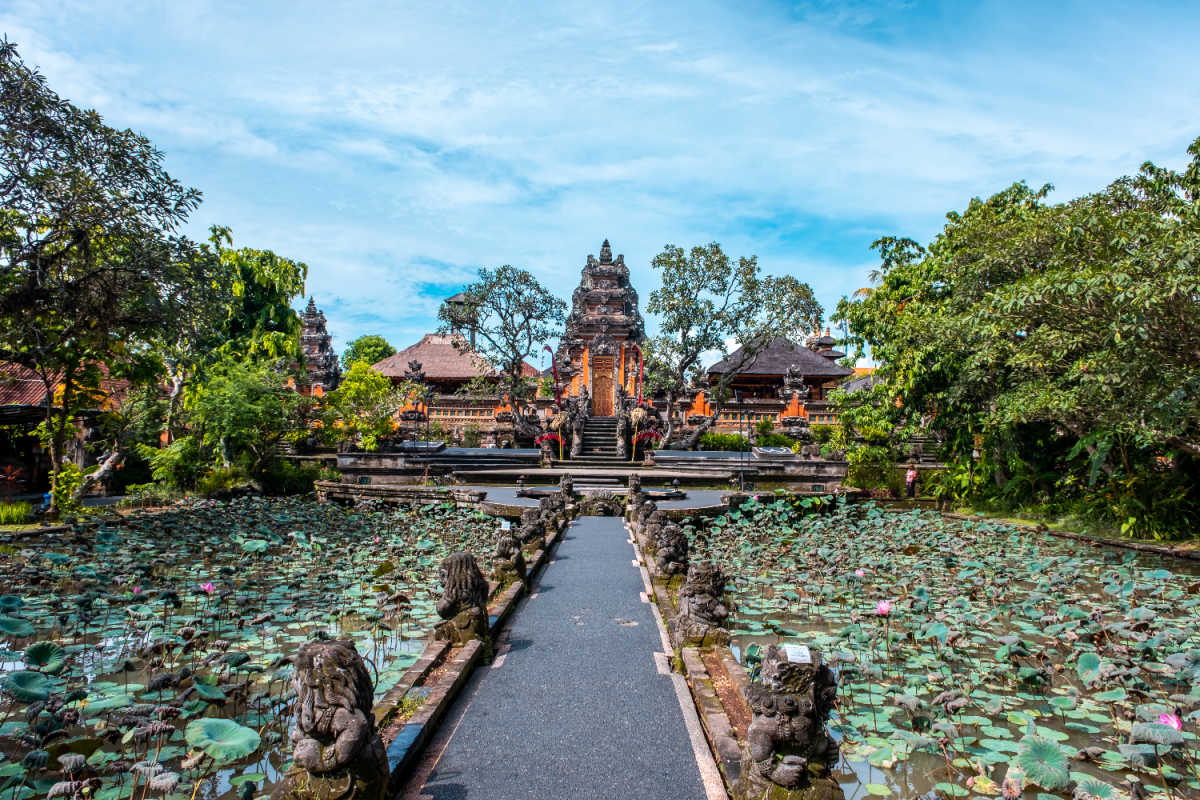
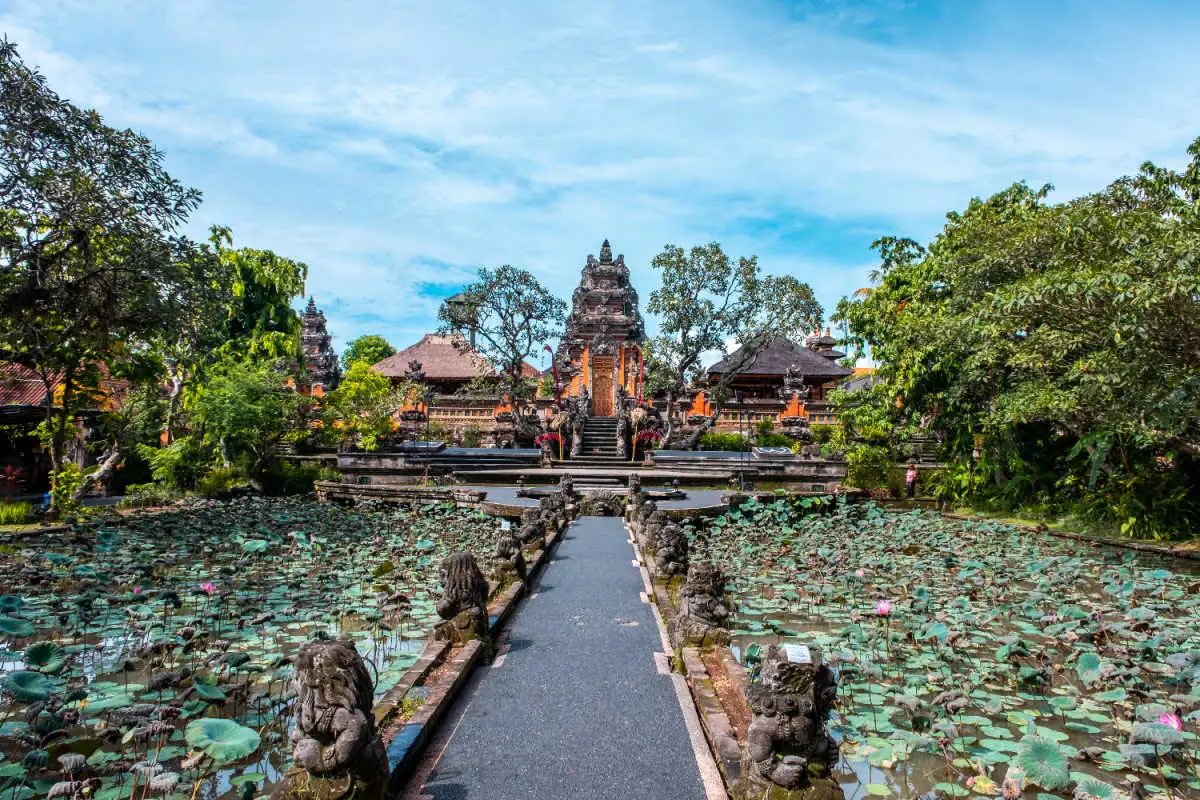
Located in the very heart of Ubud, the Ubud Water Palace, also known as Saraswati Temple or by its full Balinese name Pura Taman Kemuda Saraswati. Its name literally translates to mean ‘the temple with sacred water sources,’ and even for those without a faith, there is something deeply powerful about the energy of the palace grounds.
Whether it is the serenity of the lotus flower-filled water ponds or the magnificence of the traditional architecture, tourists can’t help but be moved by a visit to Ubud Water Palace.
Pura Taman Kemuda Saraswati is dedicated to the Hindu Goddess Saraswati. She is revered by Balinese Hindus and Hindus worldwide as the goddess of wisdom, learning, literature, art, and knowledge.
Goddess Saraswati, or Dewi Saraswati as she is also known in Bali, is depicted as having four arms, which symbolize the four aspects of the human personality: mind, intellect, introspection, and the ego. She is also often depicted holding a harp, sitting atop a lotus flower, and accompanied by swans, as well as holding the holy book of the Vedas.
Ubud Palace was founded by Tjokorda Gde Ngoerah, who was born in Puri Saren Kauh Ubud in 1856 and passed away in 1967, aged 111. During his lifetime, he saw profound shifts in the socio-cultural and political landscape in Bali, living through the final years of the traditional kingdoms of Bali, the colonial era, and the independence period.
Ngoerah was a guerrilla fighter who battled against the Dutch colonialists in 1946 and spent time in Gianyar Prison. He was an author, thinker, and cultural leader. Ngoerah worked with esteemed Balinese artist and architect, I Gusti Nyoman Lempad, to design and build Ubud Water Palace as we know it today.
Ubud Water Palace is one of the most in-demand tourism attractions in Ubud, and with good reason. To help ensure that all visitors have a comfortable, crowd-free, and safe visit, and to help preserve the complex, the team at Ubud Water Palace is limiting the number of daily visitors.
This means that booking in advance is highly advised. Tickets can be booked via the Ubud Water Palace website or through the tour package website.
While a visit to Ubud Water Palace in the daytime offers tourists the chance to explore the heritage and architecture of the palace complex, an evening visit to watch a live cultural performance is a Bali bucket list activity.
Every night, a different traditional Balinese dance or cultural performance is held at the stage at Ubud Water Palace, and guests are seated at The Cafe Lotus within the palace grounds.
Tickets cost just IDR 100,000 per person, and local dinner and snacks are served by The Cafe Lotus team, not included in the ticket fee.
On Monday nights, the Joget Dance is performed by some of Ubud’s finest dancers and artists. Ubud Water Palace explains, “Joget Dance is a lively and rhythmic traditional dance form from Bali, Indonesia. Typically performed during celebrations and social events, the dance involves graceful movements, hand gestures, and intricate footwork.”
“Dancers often wear vibrant and ornate costumes, enhancing the visual appeal of the performance. Accompanied by traditional music, the Balinese Joget Dance reflects the rich cultural heritage of Bali, showcasing the island’s artistic and expressive traditions.”
On Tuesdays, the Balinese Ladies Orchestra and Dance Troupe perform a range of different traditional dances. On Wednesdays, the Balinese Ramayana Ballet Dance is performed, similar to the Kecak show. On Thursdays, guests can expect to see the magnificent Barong.
Fridays there are no shows, but performances start again on Saturday evenings with the Legong.
The Legong is a dance rarely performed across Bali anymore, as many hotels and resorts favour the Barong and Kecak dance. On Sundays, the Janger Dance always attracts an animated crowd.
Ubud Water Palace explains, “The Janger Dance is a festive and communal expression of joy, often performed during religious ceremonies, social gatherings, and special occasions.”
“With its dynamic movements and lively music, the Balinese Janger Dance reflects the spirit of community and celebration deeply rooted in Balinese culture.”
For the latest Bali News & Debate Join our Facebook Community
Plan Your Bali Holiday:
Book The Best English Speaking Drivers For Airport Transfers & Tours
Discover more from The Bali Sun
Subscribe to get the latest posts sent to your email.