
One of the most exciting aspects of a vacation in Bali is learning about the island’s ancient culture.
Here at The Bali Sun, we are forever deepening our understanding of Balinese culture and finding new ways to share the island’s inspiring heritage with our readers. Sometimes, though, it’s good to go back to basics.


Balinese culture is nuanced, deep, and reverent. Elements of Balinese culture show up in all aspects of everyday life.
Unlike in some parts of the world where traditional culture is only called upon during holidays or major life events, in Bali, the island’s cultural heritage informs every decision from sunup to sundown.
For the first time visiting Bali, these cultural differences are hugely noticeable, but are not always explained. Balinese people are open and welcoming and are generally always happy to share explanations about different aspects of their culture with tourists and travelers.
However, sometimes tourists are a little shy to ask or are unsure who to ask about these cultural nuances that keep island life flowing.
Here at The Bali Sun, we want to ensure that everyone makes the most of their time in Bali, so we’ve drawn up a list of the everyday elements of Balinese culture that may prompt questions from new visitors to the island.
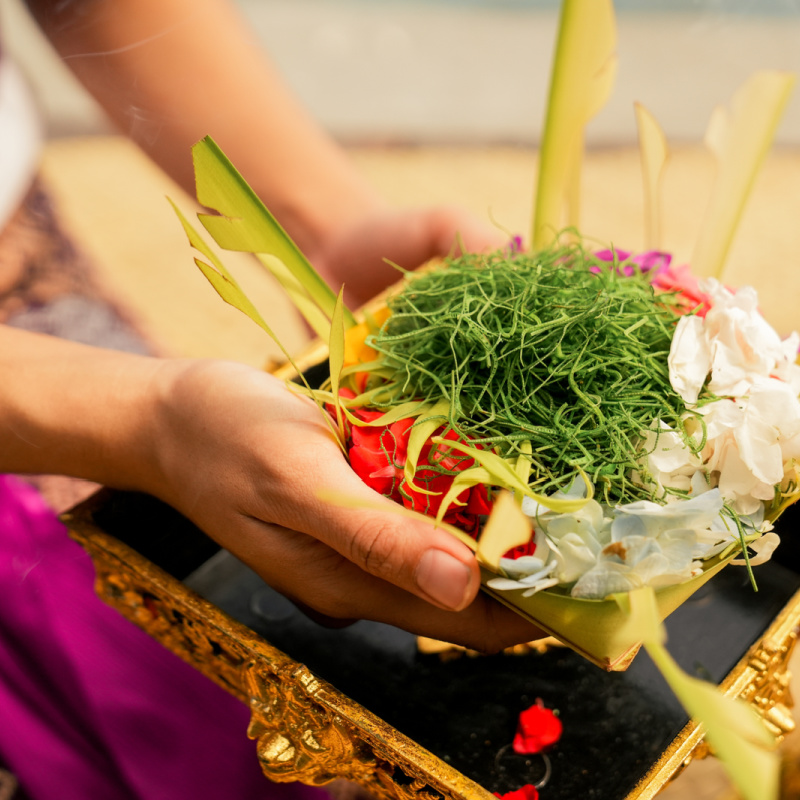
The first is the canang sari. It’s important to note that in Bahasa Indonesia, the letter ‘C’ is pronounced as a ‘Ch’ sound. Which is why Canggu is pronounced ‘Ch-anggu’, and so we’re talking about the ‘ch-anang sari’, which is the daily offering made by Balinese Hindus.
It is impossible to go a day in Bali without encountering a canang sari, or even have the chance to observe someone making such an offering. Balinese Hindus will offer their canang sari as an act of reverence and gratitude to Sang Hyang Widhi.
The canang sari, which is a small woven basket made from palm leaves, is placed at an altar or threshold accompanied by a prayer and a waft of incense.
The canang sari will be filled with flower petals and other offerings representing the Trimurti, which is the triad of Hindu gods: Shiva, represented by white, Brahma, represented by red, and Vishnu, represented by green.
It’s also common to make other offerings, including a small biscuit or sweets, and sometimes a cigarette too.
Speaking of the Trimurti, these three colours can be seen in all aspects of Balinese culture, but for tourists, the most noticeable will be in the Tridatu. The holy trinity is represented in all different places and ways, but the most common is worn as a small string bracelet.
Often offered to worshippers after a ceremony, including the traditional Balinese water blessing ceremony known as Melukat, the Tri-coloured string bracelet is blessed by holy water and tied around the wrist, and is a symbol of devotion, purity, and protection.
It is believed to ward off negative energy and serves as a reminder to those who wear it to live in harmony with the world, as is explained in the Balinese philosophy of Tri Hatha Karana. The bracelet should be worn until it falls off or breaks naturally.


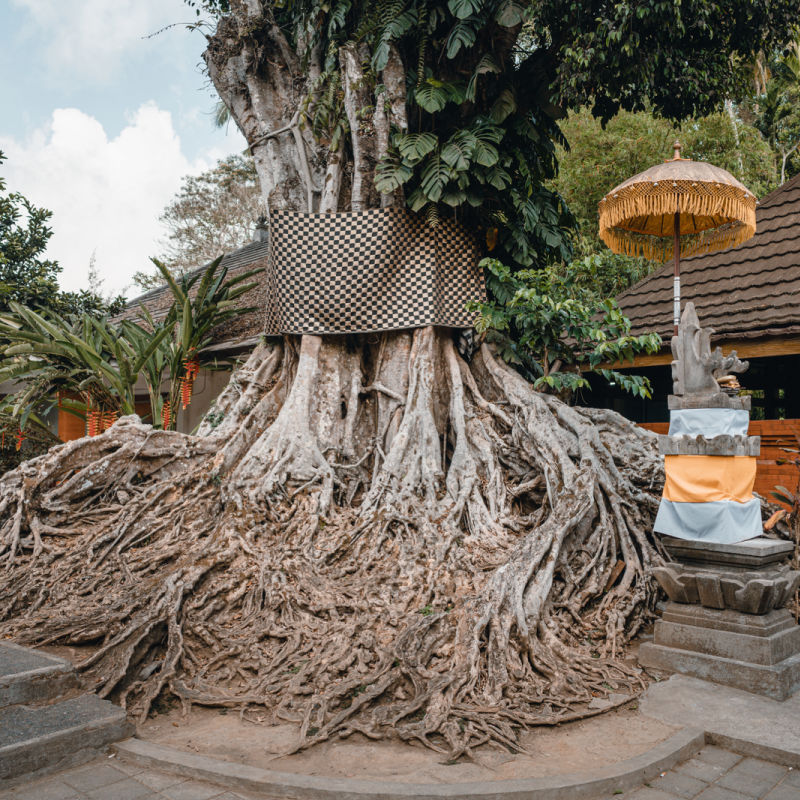
The final element of Balinese culture that jumps out at first-time visits is the Kain Poleng. This black and white chequered cloth can be seen tied around trees, temples, and shrines.
It is sometimes accompanied by gold cloth too. The cloth is a symbol of the Balinese philosophy of Rwa Bhinedha, which is the principle of the coexistence of opposites, of polarity. The white of the cloth symbolises harmony and light, while the black represents darkness and negative forces, both of which are required for balance in the cosmos.
Tourists who want to take an even deeper dive into Balinese culture will find fascinating exhibitions at top attractions like the GWK Cultural Park in Uluwatu, as well as the ARMA Museum in Ubud.
For the latest Bali News & Debate Join our Facebook Community
Plan Your Bali Holiday:
Book The Best English Speaking Drivers For Airport Transfers & Tours
Discover more from The Bali Sun
Subscribe to get the latest posts sent to your email.