
The resident troop of monkeys at Uluwatu Temple has been branded as a ‘criminal enterprise’.
The wild monkeys who live at one of Bali’s most important temples have reached international fame before, and have now hit headlines in The Wall Street Journal.
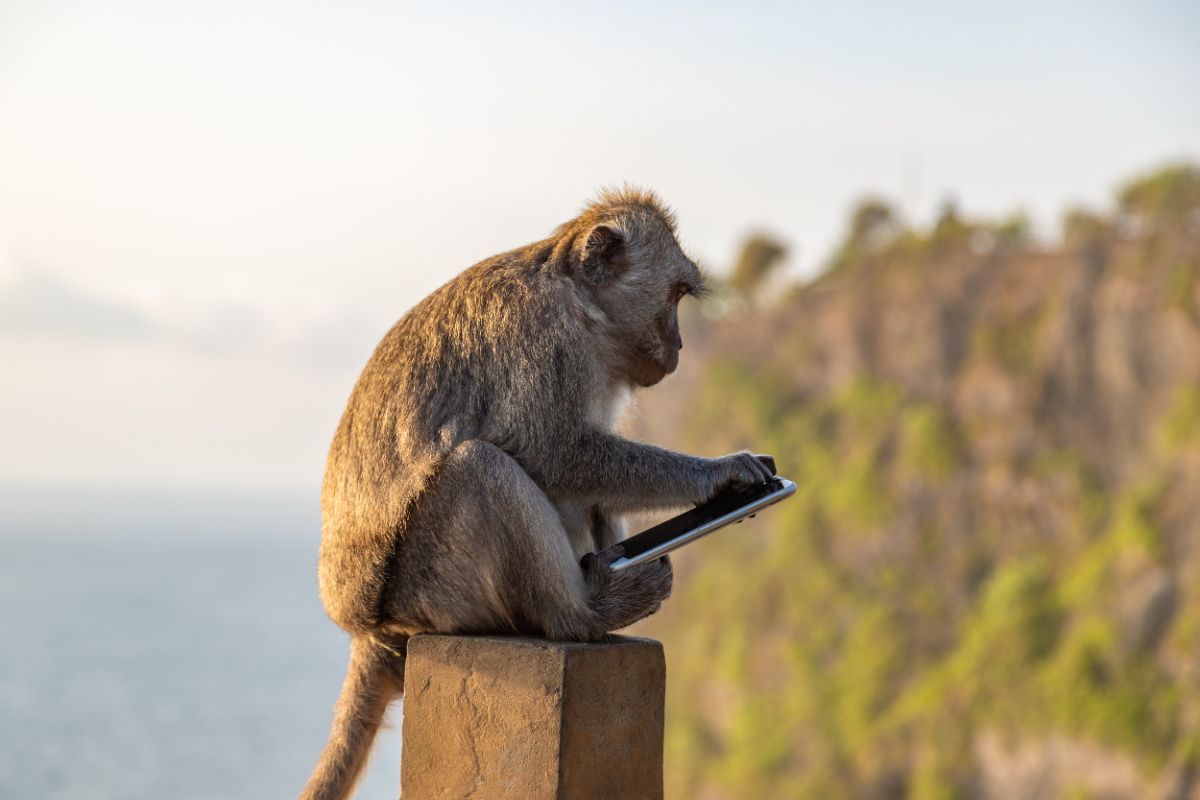
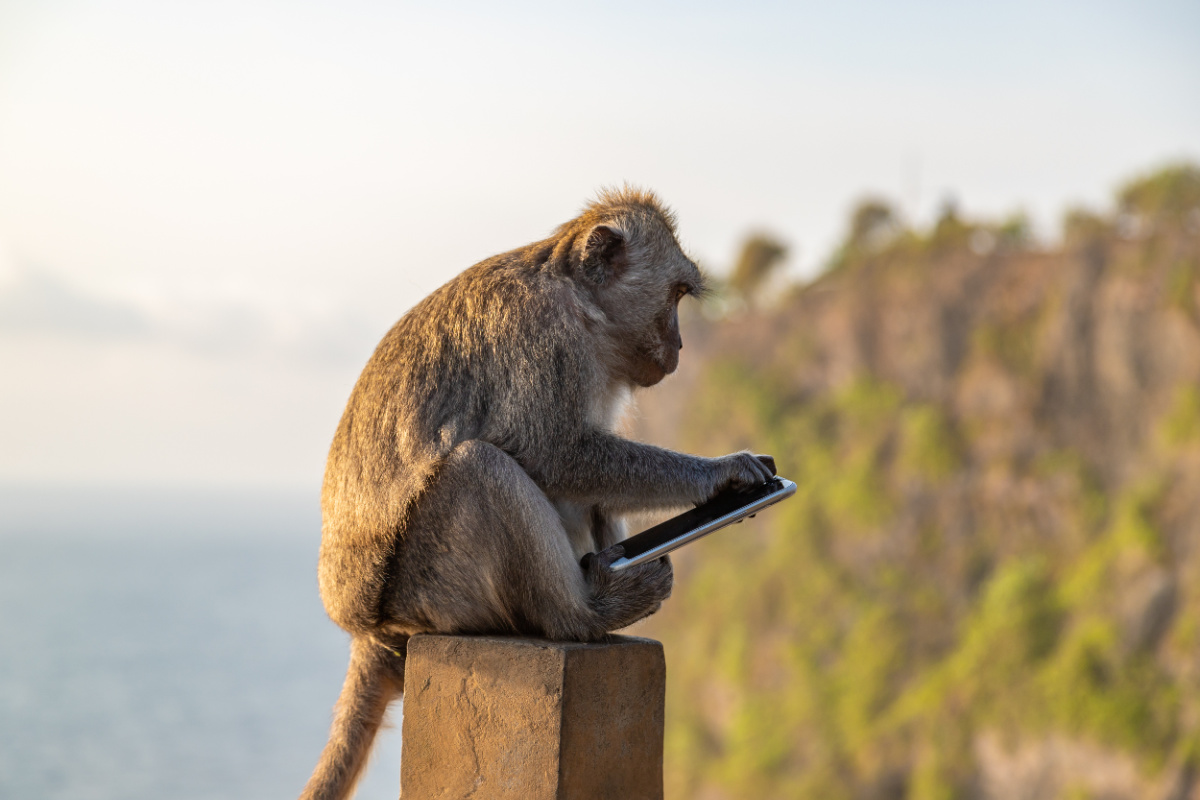
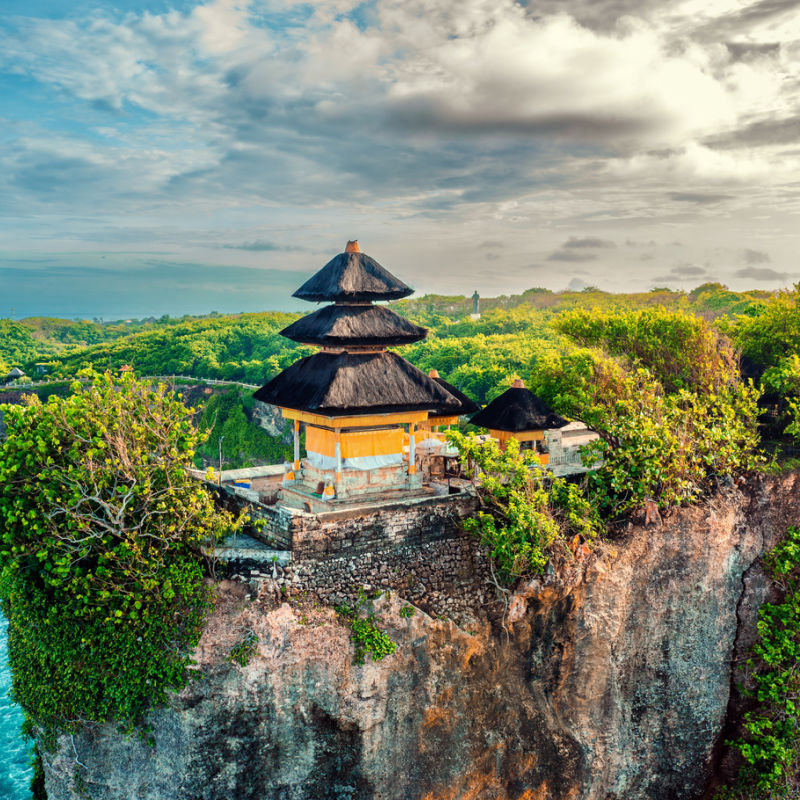
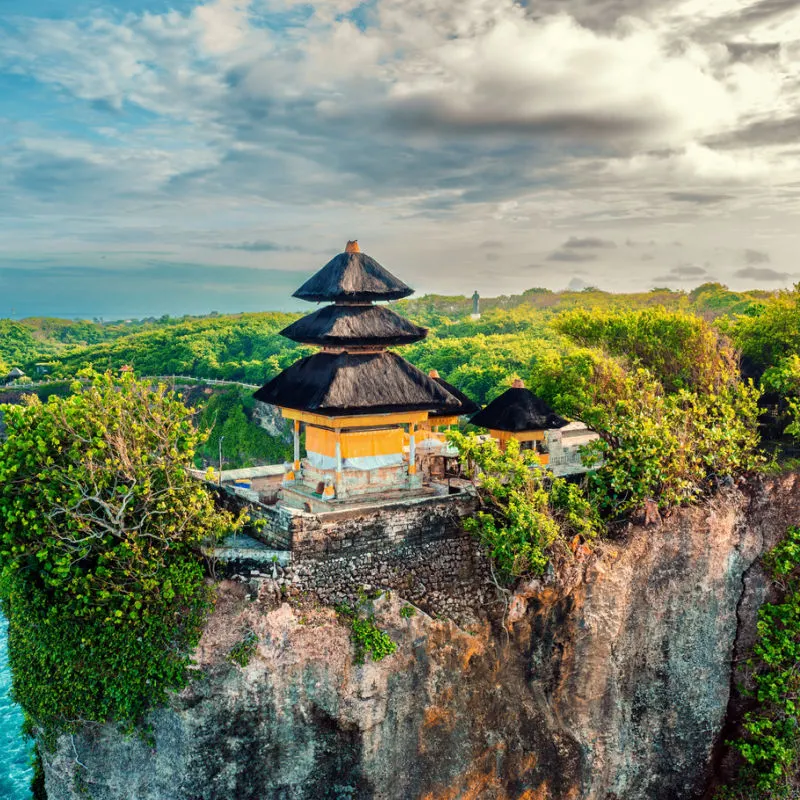
From viral TikTok fame to being featured in a BBC natural documentary, the monkeys at Uluwatu Temple are no strangers to the limelight, nor condemnation from tourists. Uluwatu’s Temple is not only one of Bali’s most popular tourist attractions but, first and foremost, one of the island’s most important cultural sites.
Built in the 11th Century, Uluwatu’s Temple is one of Bali’s ocean temples, and the 600-strong troop of resident monkeys who live in and around the temple grounds is considered to be guardians of the landscape.
However, as tourist interest in both the temple and the monkeys has grown, the primates have become increasingly accustomed to visitors and have started to use the presence of humans to their advantage. Many feel that the situation has got out of control and that the monkeys have been encouraged (however inadvertently to begin with) to interact with tourists.
Investigations like that from World Animal Protection have consistently found that there are no ethical wildlife attractions in Bali and Lombok, including those which involve wild animals.
During the 2023 undercover animal welfare investigation, World Animal Protection found, in addition to poor welfare conditions across Bali’s wildlife venues, that concerning management practices were in place across attractions where tourists can encounter wild animals, too.
The report states, “The findings of our report indicate that currently, there is no responsible way for tourists to see wildlife in Bali and Lombok.” Adding “Even opportunities to see free-ranging wildlife, such as macaques and dolphins, are not currently responsibly managed and should be avoided.”
The monkeys at Uluwatu Temple are used to seeing thousands of tourists a day, and the monkey keepers, known as ‘pawang’, are on hand to help keep the peace between tourists and the primates.
However, monkeys have long learned that if they acquire visitors’ belongings, whether that be glasses, smartphones, cameras, or sometimes even whole handbags, they will be offered food and tasty treats to help barter the items back. This has reinforced the learned behaviour in the monkeys, who now spend their days targeting tourists for treats.
According to Kadek Ari Astawa, who is the team manager for the pawang, this is a multi-generational behaviour in the monkeys, who were stealing belongings long before the influx of tourists. According to Astawa, for decades, the monkeys were known to steal the belongings from worshippers.
Astawa told reporters from The Wall Street Journal that temple management teams have tried all manner of potential solutions to help stop the monkeys from targeting tourists. This has included fixed feeding schedules, intermittent feeding schedules, and changing the diet of the monkeys, and yet, the stealing continues.
Uluwatu Temple’s pawang Ketut Ariana has cared for the monkeys for more than two decades. He says that he sees the monkeys snatch dozens of items every day.
He noted that the monkeys now target smartphones, of which he has to retrieve 5-10 per day. In fact, even reporters are not immune to the monkey business.
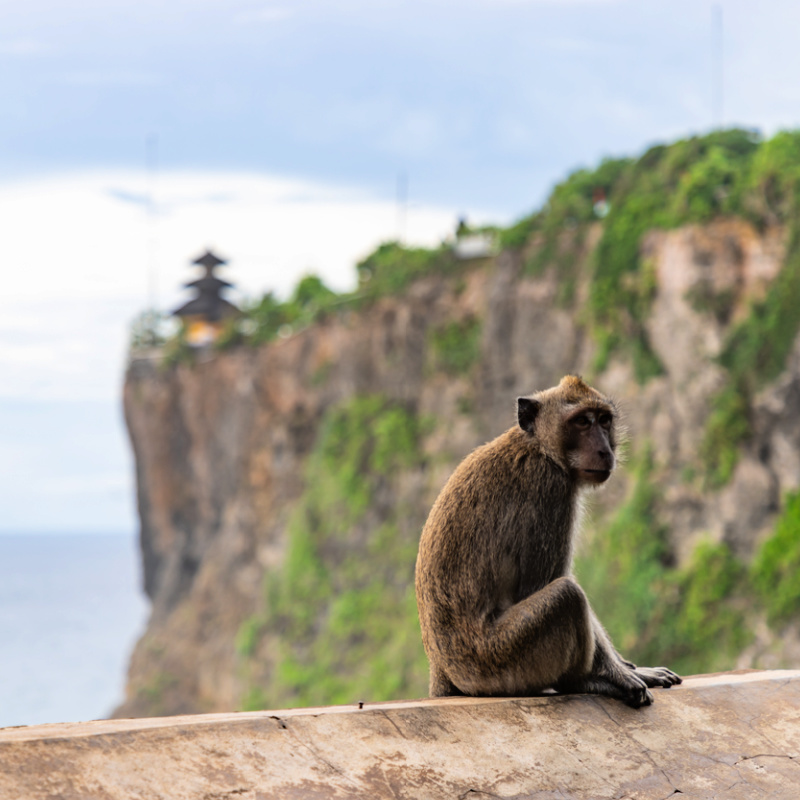
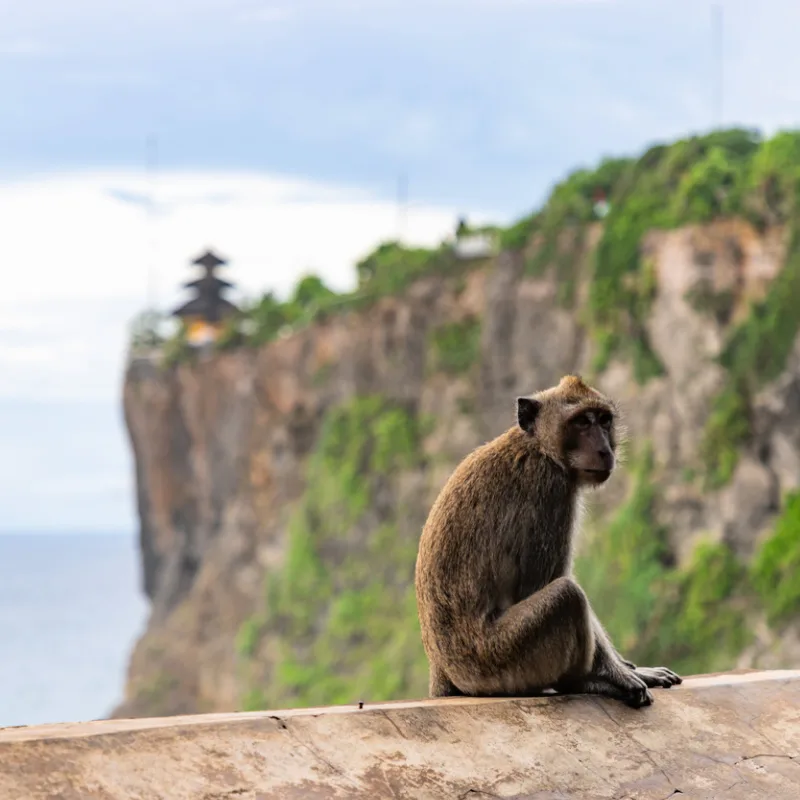
Hannah Miao, a tourist and reporter visiting the temple, shared that her phone was swiped by a monkey during her tour of the temple. She wrote, “I pictured the monkey chucking my phone into the ocean and tried not to cry. A passerby fetched a handler who climbed over the barrier at the cliff’s edge in search of the robber. Silently, I made a plea to the universe, promising to do good deeds if I got my phone back.”
Adding “What followed was more than an hour of hide-and-seek. Again and again, the handler would spot the monkey, only to watch it scurry away when he got too close. The handler called for backup. The backup called for backup.”
When she eventually got her phone back, the glass was cracked, but the monkey had even taken some photos.
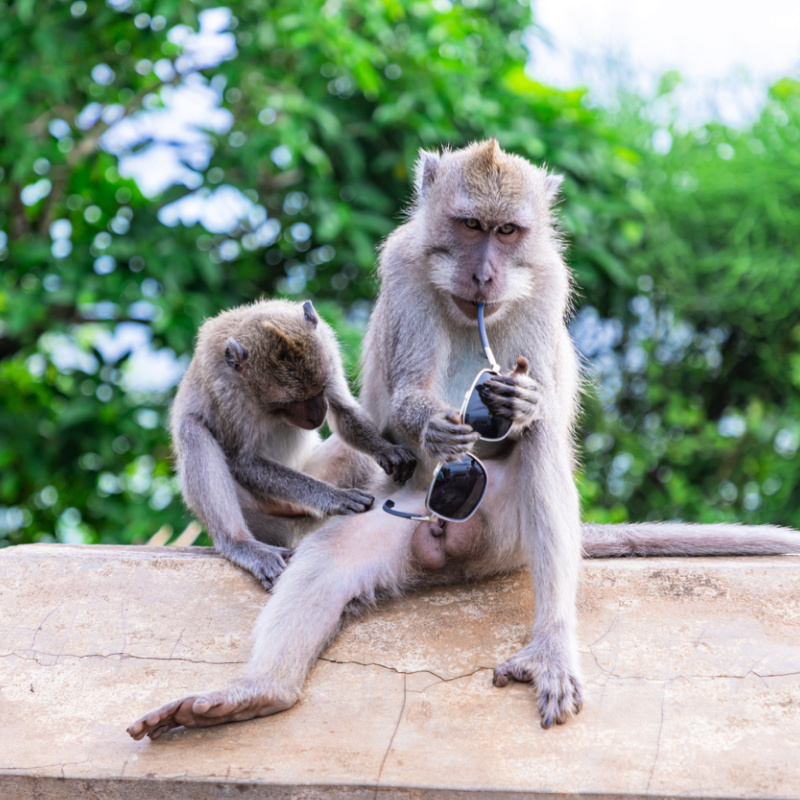
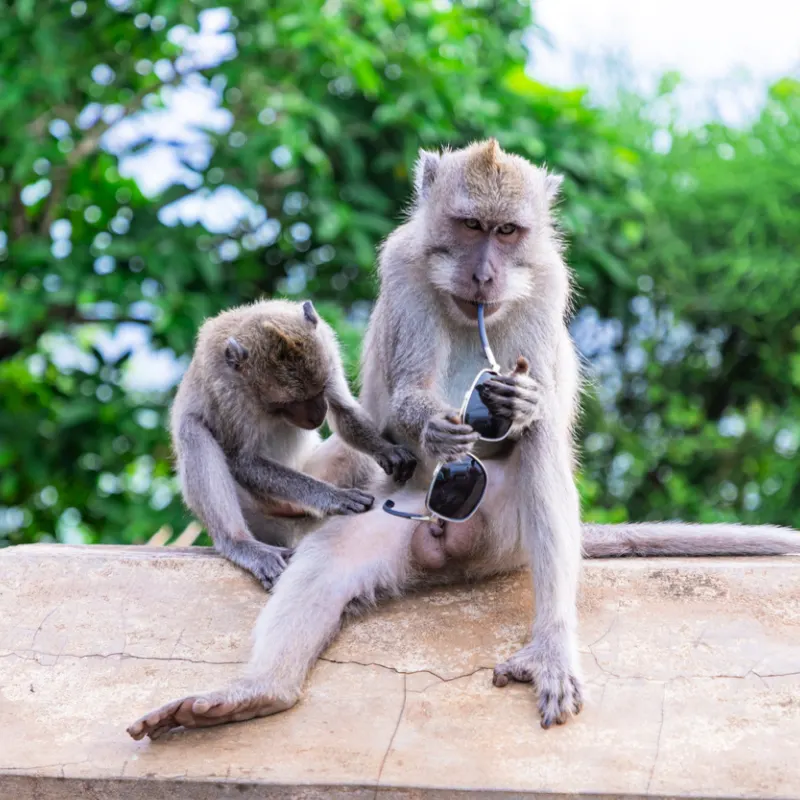
Uluwatu Temple is clear that tourists should not interact with the monkeys. A safe distance should be maintained at all times, and belongings should be kept out of view. No food should be brought into the temple, and if tourists wish to take photos, they should do so quickly and calmly.
For the latest Bali News & Debate Join our Facebook Community
Plan Your Bali Holiday:
Book The Best English Speaking Drivers For Airport Transfers & Tours
Discover more from The Bali Sun
Subscribe to get the latest posts sent to your email.
J West Hardin
Wednesday 27th of August 2025
Culling the monkeys numbers with onsite neutering as the Thai have done to the Lop Buri gangs has been an effective deterant to theft. The monkeys know when their balls are about to be snipped and flee elsewhere.
Shorty
Sunday 31st of August 2025
@J West Hardin,
So the females don't steal things ?
Steve bm
Wednesday 27th of August 2025
Yes the lokals have given good training
Firechef
Wednesday 27th of August 2025
Better yet, banish the monkeys into the jungle where they belong or put sedatives into their food to keep them docile.
Viktor Z
Sunday 31st of August 2025
@Firechef,
They should add some sedative in his beer, throw him in a trunk and ship him to Komodo island..
A growing number of locals is getting fed up with those who think that they are privileged…
It starts with a smile 🙃
Shorty
Thursday 28th of August 2025
@Firechef,
Banish to the jungle? They're one of the reasons tourists go there.
There's ample warnings for tourists. If they choose to ignore them, so be it.