
In Bali, as is the case all across Indonesia, coffee is life. Seriously. No matter the time of day or night, the answer to ‘do you want coffee?’ is always YES!
While coffee keeps the country on the move, growers and roasters across Bali have been talking to reporters about how the cost of production is changing and what that will mean for consumers, including tourists.
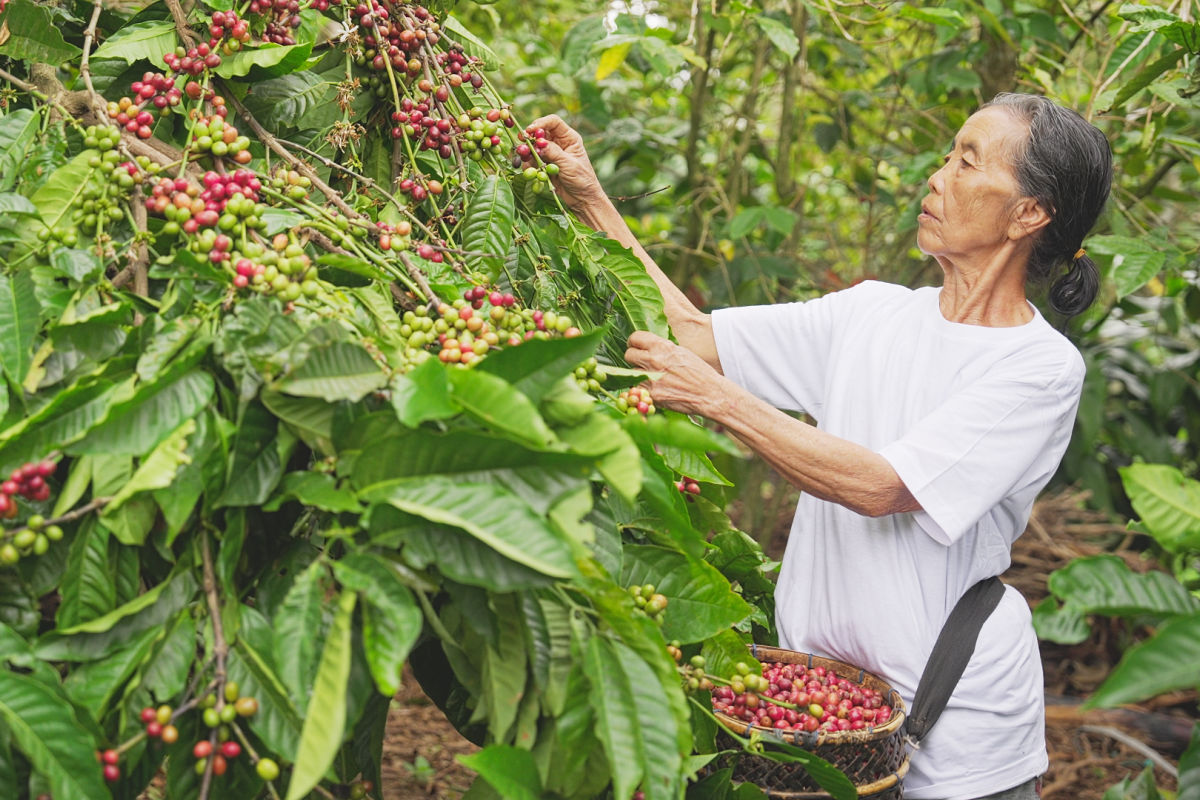
The cost of everything is rising, it seems. In Bali, coffee farmers are facing double pressure. Not only is competition rising due to the ever-increasing number of coffee shops and roasteries, but so too is the cost of raw materials needed to grow the coffee itself.
Speaking to reporters, the founder of much-loved Bali coffee brand Expat Roasters, Yande J Wirawan, explained that the boom in the coffee industry over the last five years is now reaching a tipping point.
Increased demand for raw materials, both for the huge domestic market and for international export, has put huge pressure on producers, to the point that demand is nearly outstripping supply.
Wirawan told reporters, “Roasteries are now increasing in number. Competition is getting tighter. On the other hand, the need for coffee for the local and international markets is also increasing.”
He noted that these issues are compounded by other, less obvious factors. According to him, the sustainability of the coffee supply also faces the challenge of farmer regeneration. Not many young people are interested in continuing their family businesses as coffee farmers, which is now a concern that could affect production in the long term.
Outline the figures, Wirawan explained that the costs are not only increasing, but increasing in range too. “It depends on the origin. Some [beans] are IDR 80,000, IDR 150,000, IDR 200,000, and even IDR 250,000 per kilogram.”
This increase in production and raw material costs is then inevitably felt by coffee roasters, cafes, and their customers. The founder of Jenar Kopi, Munir, told reporters how coffee prices have been changing month by month over the past year. In June alone, there was an increase of around 7 to 8 percent.
He shared, “It’s gone up several times this year. The last time was around 7 to 8 percent this month.”
Munir explained how rising production costs are reducing profit margins.
He shared that in Bali’s booming tourist areas, especially businesses don’t have much room to raise prices because they must maintain competitiveness and product quality to prevent customers from switching to competitors.
He also highlighted how one of the other big challenges facing the food and beverage industry today lies in human resource management.

The high employee turnover rate in Bali and nationwide means businesses must continually conduct training and operational adjustments, which are time-consuming and financially costly. He shared, “The hardest part is HR. There are frequent changes. But over time, we learn how to maintain our human resources.”
So what does all this mean for tourists visiting Bali in 2026? If you’ve been with us here at The Bali Sun for some time now, you’ll know that we have been closely following the impact of the weakening of the Indonesian Rupiah against the US dollar, and how that is affecting both tourists, the tourism sector and local communities.


For most tourists visiting Bali, the increasing coffee prices won’t impact the overall vacation budget too much, but it is something to be aware of.
Don’t be surprised if a coffee in your go-to cafe in Canggu or Uluwatu has increased from IDR 35,000 to IDR 50,000.
We know that it will always be possible to find a real Kopi Bali for IDR 10,000 off the beaten path…if you know, you know!


What it does show is that the cost of traveling in Bali is changing, little by little, as it has always done. As ever, here at The Bali Sun, we encourage tourists to support locally owned and operated businesses, whether that be coffee shops and cafes, or hotels, restaurants, or tour guides.
For the latest Bali News & Debate Join our Facebook Community
Plan Your Bali Holiday:
Book The Best English Speaking Drivers For Airport Transfers & Tours
Discover more from The Bali Sun
Subscribe to get the latest posts sent to your email.
Shorty
Thursday 2nd of July 2026
Supply exceeds demand?
WAYAN BO
Wednesday 1st of July 2026
Coffee prices in Europe are decreasing, import it from EU 🤣