
Today is one of the most beautiful days of the year to be in Bali. Wednesday 17th June 2026 is Galungan Day in Bali, and it only happens every 210 days.
The year 2026 is extra special because Galungan and Kuningan will be observed only once.
Galungan and Kuningan are Balinese Hindu celebrations of the triumph of dharma over adharma, of good over evil. Galungan Day occurs every 210 days in accordance with the traditional Balinese pawukon calendar, and Kuningan Day is observed 10 days later.
In 2026, the festival will only be observed once; in 2025, it was observed in April and November; and in 2027, it will be observed in January and August.
The holiday not only celebrates the triumph of good over evil, but also marks the days when Balinese Hindus believe that the ancestral spirits visit the earth. The spirits descend to earth on Galungan Day and return to the cosmic realms on Kuningan Day.
Tourists in Bali right now will have already felt the pre-Galungan buzz about the place. While the festival starts on 17th June, the ceremonies for Galungan actually start three days prior.
Three days before Galungan is the day known as Penkeyeban, when bananas are cooked for offerings at temples and shrines across the island. Two days before Galungan is known as Penyajaan, when fried rice cakes, known as jaja, are made, along with specific prayers and blessings.
The day before Galungan, known as Penampahan, is when animals are slaughtered as offerings and for community feasts; usually pigs and chickens.
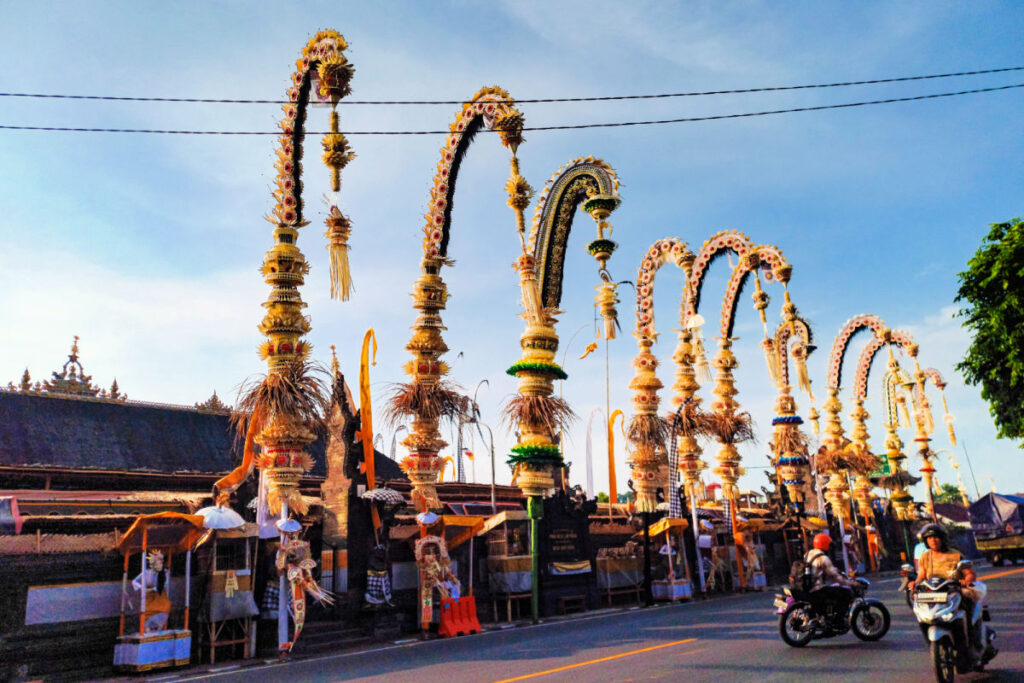
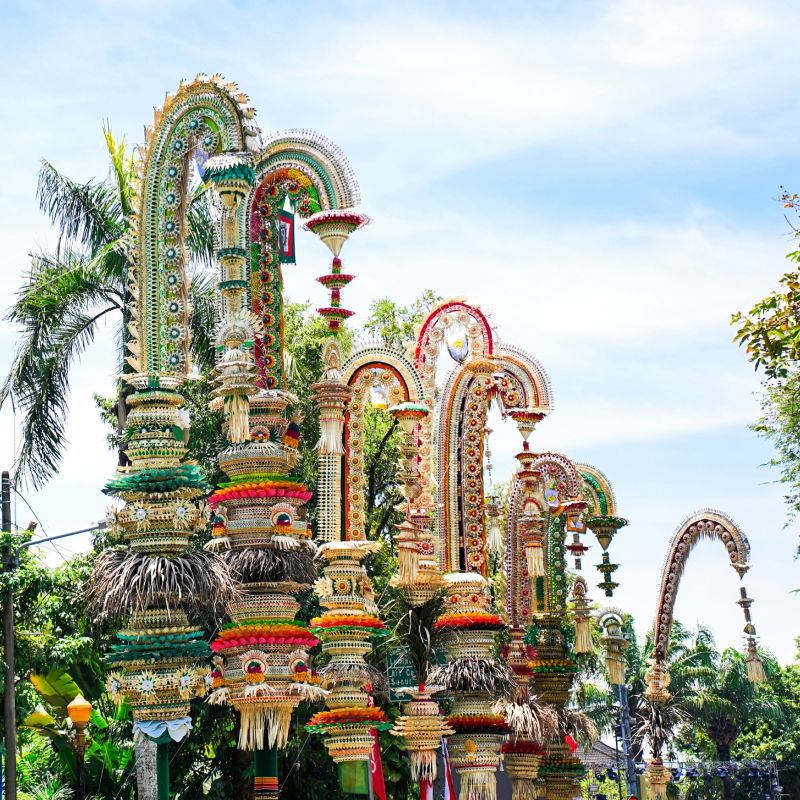
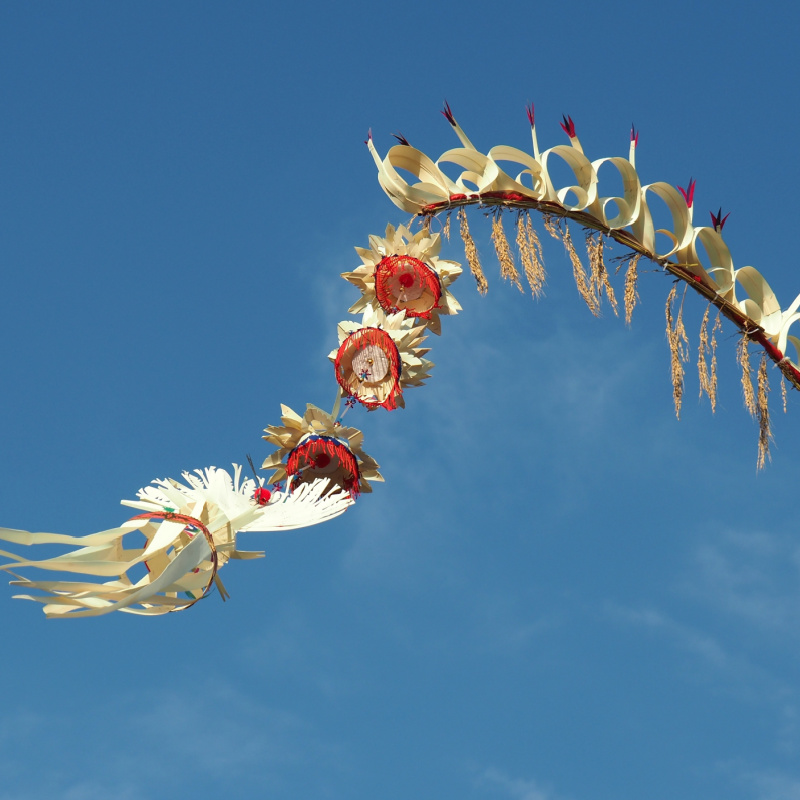
On Penampahan is usually when the penjor are installed across the island too. The penjor are the tall, ornately decorated bamboo poles that are installed outside every home and along every street in Bali.
These offerings are created by the men of each family, and while many are simple in design, many families and communities go all out and install incredibly intricate and elaborately decorated penjor. The penjor typically stays up for weeks after Galungan, or until they start to break naturally.
Galungan Day is a day of visiting family for local Balinese people. There are also ceremonies held at temples in every family home and in every village. On Kuningan Day, which will be observed on 27th June, there are further temple ceremonies where the ancestral spirits return to the cosmic realms.
Kuningan is derived from the Indonesian word for yellow, kuning. This colour can be seen everywhere, as it symbolised purity and prosperity.
The yellow is often seen in the kamen and kabaya, the traditional clothing worn by community members, as well as in flowers, in ceremonial offerings, and in the rice served at the family and community dinners as nasi kuning.
Unlike on Nyepi Day, life in Bali continues as usual around Galungan and Kuningan. Schools are closed for the holidays, and some local government services and banks work shorter hours.
Ceremonies punctuate normal daily life, and tourists visiting Bali may even be invited to attend these prayers by their hosts.
That being said, access to temples is always prioritized for Balinese Hindu worshippers. Over the coming days, tourists may discover that some temples, or areas of some temples, are closed to non-worshippers so that ceremonies and prayers can be conducted in private.
Tourists must respect these closures and cooperate with temple staff and tourist attraction officers.
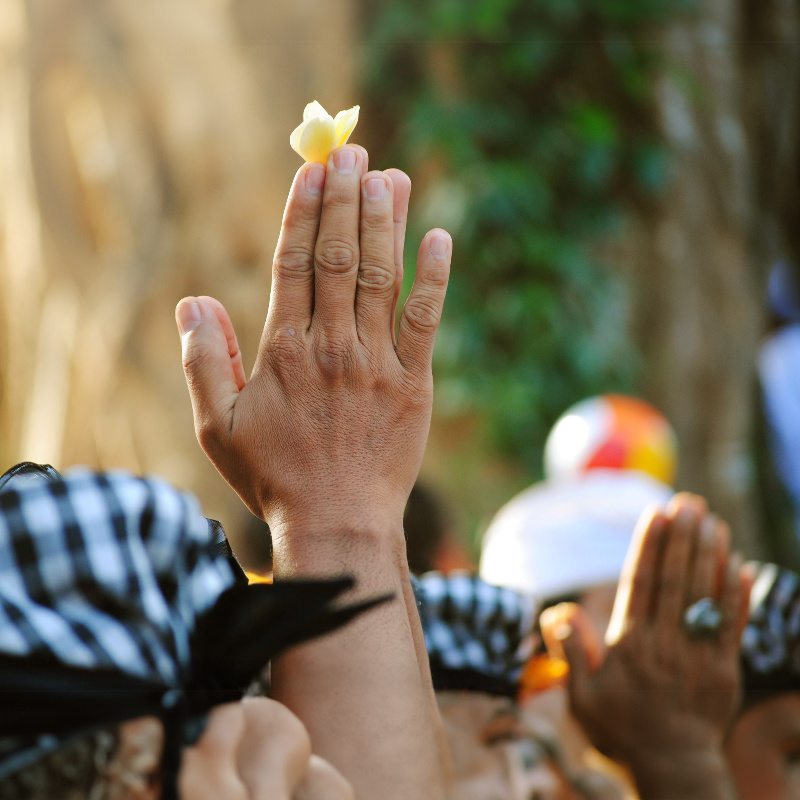
Here at The Bali Sun, we always remind tourists that this is a deeply sacred and reverent time on the island. While life goes on, there is a slower and more peaceful feel to daily life that we always encourage visitors to observe and enjoy.
To all who are celebrating this time, here at The Bali Sun, we share our heartfelt Rahajeng Nyanggra Rahina Galungan to all.
For the latest Bali News & Debate Join our Facebook Community
Plan Your Bali Holiday:
Book The Best English Speaking Drivers For Airport Transfers & Tours
Discover more from The Bali Sun
Subscribe to get the latest posts sent to your email.